
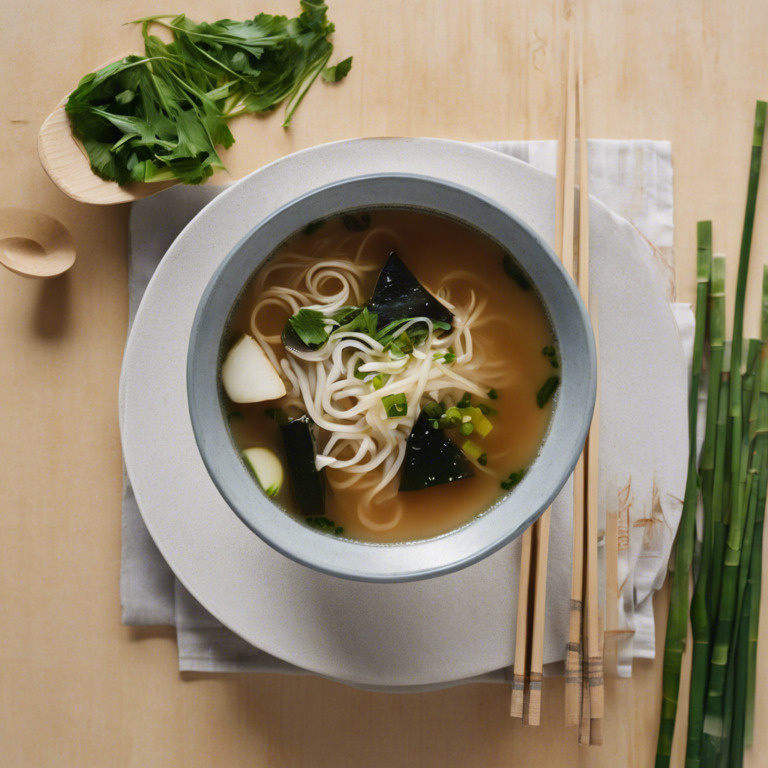
Miso soup is a traditional Japanese soup that is known for its comforting and flavorsome qualities. Made with a rich and savory broth, it is often enjoyed as a starter or side dish in Japanese cuisine. The soup is typically made with miso paste, which is a fermented soybean paste that provides a unique and robust flavor to the dish. Along with miso paste, the soup is filled with various ingredients such as tofu, seaweed, and green onions, adding depth and texture.
Recipe Info
Let’s get started by looking at some important details about this miso soup recipe.
| Prep Time | Cook Time | Total Time | Yields |
|---|---|---|---|
| 10 minutes | 15 minutes | 25 minutes | 4 servings |
| Diet | Calories | Course | Cuisine |
|---|---|---|---|
| Vegetarian | 135 kcal | Starter | Japanese |
Ingredients
To make this delicious miso soup, you will need the following ingredients:
- 4 cups vegetable broth
- 3 tablespoons miso paste
- 1/2 cup cubed tofu
- 2 sheets dried seaweed (nori), cut into thin strips
- 2 green onions, thinly sliced
- 1 tablespoon soy sauce
- 1 teaspoon sesame oil
- 1/2 teaspoon grated ginger
- Optional: sliced mushrooms, sliced carrots, or any other vegetables of your choice
Instructions
Now that we have gathered our ingredients, let’s dive into the detailed step-by-step instructions to make a flavorful miso soup:
- In a medium-sized pot, bring the vegetable broth to a gentle simmer over medium heat.
- Meanwhile, in a small bowl, whisk together the miso paste and a ladle of the hot broth until well combined and smooth. This step will prevent the miso paste from clumping when added to the soup.
- Once the broth is simmering, add the tofu cubes, seaweed strips, and any other optional vegetables you desire. Allow them to cook for about 5 minutes, or until the tofu is heated through and the vegetables are tender.
- Reduce the heat to low and carefully add the miso paste mixture to the pot, stirring gently to incorporate it into the soup. Be careful not to boil the soup after adding the miso paste, as high heat can destroy its delicate flavors.
- Add the soy sauce, sesame oil, and grated ginger to the pot, stirring well to combine. These ingredients will enhance the overall savory and aromatic qualities of the soup.
- Allow the miso soup to simmer gently for another 2-3 minutes to meld the flavors together.
- Remove the pot from the heat and sprinkle the sliced green onions on top of the soup. The bright green onions will add a fresh and vibrant element to the dish.
- Serve the miso soup hot in individual bowls, garnishing each bowl with additional seaweed strips if desired.
Variations
While the classic miso soup recipe is incredibly delicious on its own, you can also experiment with variations to suit your taste preferences or dietary needs. Here are a few ideas to consider:
- Vegetarian/Vegan: To make this recipe vegetarian or vegan, ensure that the vegetable broth you use is free of any animal products. Additionally, substitute tofu for any animal-based protein or add more vegetables to make the soup heartier.
- Gluten-free: Miso paste is typically gluten-free, but it’s essential to double-check the label before purchasing. Also, opt for gluten-free soy sauce or tamari to keep the entire recipe gluten-free.
- Seafood: For a seafood twist, add pre-cooked shrimp, scallops, or clams to the miso soup. The briny flavors of the seafood will complement the miso broth beautifully.
- Spicy: If you enjoy a bit of heat, add some chili flakes or Sriracha sauce to the soup for a spicy kick. Adjust the amount according to your spice tolerance.
- Noodle Soup: To transform this miso soup into a heartier meal, cook some soba noodles or udon noodles separately and add them to the soup just before serving.
Storage & Shelf Life
Miso soup is best enjoyed fresh and hot, but if you have leftovers, you can store them in an airtight container in the refrigerator for up to 2 days. However, keep in mind that the texture and flavors of the ingredients may change slightly upon reheating.
Tips
Here are a few tips to ensure your miso soup turns out perfectly:
- Always choose a high-quality miso paste for the best flavor. Look for miso paste that is organic and traditionally made for an authentic taste.
- Be cautious with the heat when incorporating the miso paste into the soup. High heat can cause the miso to lose its unique flavor profile, so it’s best to simmer the soup gently.
- Feel free to customize the soup with your favorite vegetables or protein sources. Miso soup is incredibly versatile, and you can experiment with different ingredients to suit your preferences.
- For added umami flavor, consider adding a small handful of bonito flakes (dried fish flakes) to the soup. These flakes are commonly found in traditional miso soup recipes and can enhance the overall taste.
Now that you have all the information and steps needed, it’s time to put on your apron and start preparing this comforting and delicious miso soup. Enjoy!