
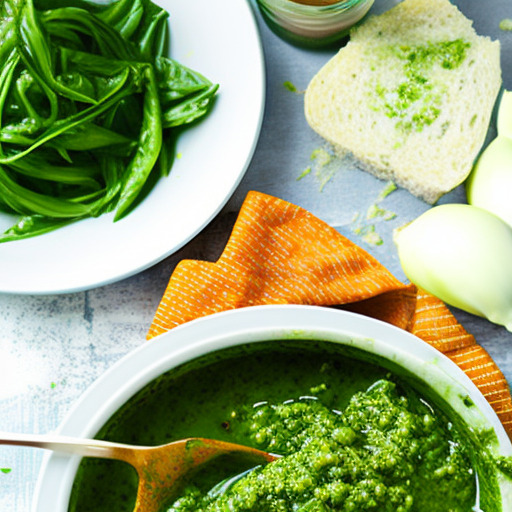
pesto recipe
How to Make the Perfect Pesto at Home
Introduction
Pesto is a versatile and delicious sauce that originated in Genoa, Italy. Traditionally, pesto is made by combining fresh basil leaves, pine nuts, garlic, Parmesan cheese, and olive oil in a mortar and pestle until smooth. However, nowadays, many people prefer to use a blender or food processor to make the process easier and quicker.
Making pesto at home allows you to customize the flavor to your liking and ensures that you are using fresh ingredients. In this article, we will give you step-by-step instructions on how to make the perfect homemade pesto.
Ingredients
To make traditional pesto sauce from scratch for 4-6 servings, you will need the following ingredients:
- 2 cups of fresh basil leaves (washed and patted dry)
- 1/2 cup pine nuts
- 4 garlic cloves
- 1/2 cup grated Parmesan cheese
- 1/2 cup extra virgin olive oil
- Salt to taste (around 1/4 teaspoon)
Kitchen Equipment Needed
To make pesto at home, you will need some kitchen equipment such as:
- A blender or food processor (Best recommended: food processor)
- A sturdy cutting board
- Bowl
- Measuring cups and spoons
Preparation
Before making the pesto sauce recipe, there are a few things you must do:
Picking and Washing Basil Leaves
Pick fresh basil leaves from the plant and wash them gently under running water. Pesto requires only basil leaves and not the stems, so ensure that you remove all the leaves from the stem.
Toasting Pine Nuts and Garlic
Toast your pine nuts and garlic in a skillet over medium heat for 5-7 minutes, or until lightly golden. Be sure to watch them closely so they do not burn. Remove them from the skillet and let it cool.
Grating Parmesan Cheese
Grate your Parmesan cheese using a fine grater.
Making the Pesto Recipe Step-by-step
Now that you have prepared your ingredients, you are ready to make pesto sauce at home:
Step 1: Preparing Basil Leaves
Add washed basil leaves into a food processor.
Step 2: Toasting Pine Nuts and Garlic
Add toasted pine nuts and garlic into the food processor
Step 3: Combining Ingredients in a Food Processor
Add Parmesan cheese and olive oil to the mix. blend continuously until everything is mixed up evenly.
Step 4: Processing Until Smooth
Blend everything together for approximately two minutes, keeping in mind to stop mid-blend occasionally to scrape down the sides of the food processor with a spatula. Continue blending until everything is smooth and pasty as shown below
Step 5: Adding Salt to Taste
Add salt to taste. As mentioned earlier, around a 1/4 teaspoon of salt will do.
Variations on Traditional Pesto Recipe
If you want to experiment with the traditional pesto recipe, here are some variations you can try:
Sun-Dried Tomato Pesto
To make sun-dried tomato pesto sauce:
- Add 1 cup of sun-dried tomatoes (drained and rinsed) in step 3
- Substitute toasted almonds for pine nuts
- Reduce olive oil quantity to about 1/4 cup
Arugula Pesto
To make arugula pesto sauce:
- Add 2 cups of arugula leaves in place of basil leaves in step 1
- Substitute pistachios for pine nuts (you can substitute pine nuts for almonds or walnuts though)
- Add a pinch of red pepper flakes for added spice (optional)
Kale Pesto
To make kale pesto sauce:
- Add 2 cups of kale leaves and stems (washed and pat dried) in place of basil leaves in step 1.
- Use cashews instead of pine nuts. You can use any nut that appeals to you, though.
- Blanch your Kale Leaves and chop them into small pieces prior to adding them in the food Processor.
- As a spread on sandwiches or toast
- Tossed with roasted vegetables or potatoes
- As a dip for vegetables or crackers
- As a topping for pizza or bruschetta
You can try these simple variations if you love experimenting with the flavors.
Serving Suggestions
Here are some ways you can enjoy your homemade pesto:
Classic Pasta Dish with Pesto Sauce
Pasta tossed with pesto sauce and topped up with roasted cherry tomatoes, this dish is all you need to satisfy your craving for a fresh and hearty meal.
Mediterranean Toast with Avocado and Tomato Topping
Toast a slice of bread, spread pesto sauce over it, then arrange sliced avocado and topped sliced tomato on top. Sprinkle some salt and pepper to taste for the teasterning.
Pizza Topping Mix with Mozzarella Cheese, Tomatoes, and Olives
Spread the homemade pesto sauce liberally over your pizza dough crust, then add some sliced tomatoes, mozzarella cheese and top with black olives. Bake it at 250C for around ten minutes. Serve it hot.
The options are endless!
Storing and Reserving Pesto Sauce
If you have pesto sauce left after using what you need for your recipe, it can be stored for later use.
Short-term Storage in Fridge, for up to a week
Reserve pesto sauce in an airtight container in Fridge as to be used within a week.
Long-term Storage in the Freezer
Store your homemade pesto in the freezer by sealing it in an airtight bag/container. Freeze each container separately avoiding any air as possible. They can be stored up to six months with no significant quality difference from the fresh ones. Ensure that you defrost the sauce first before using it by placing in fridge some hours prior.
Tips for Perfect Homemade Pesto Recipe
Here are few tips on how you can make perfect homemade pesto every time:
Using Quality Ingredients
Make sure to use fresh ingredients like basil (not wilted), nuts (no rancid smell), freshly grated cheese (much better than store-bought). Invest in whole nuts rather than the already chopped ones.
Not Over-mixing Pest Ingredients
Be careful not to over-mix pesto ingredients; this could result in to oily consistency. As a general rule of thumb, aim at blending the mix less than 1 minute.
Conclusion
Making your own pesto at home is simple and quick once you get used to it. Experimenting with different herbs and nuts allows you to come up with unique flavors that everyone can enjoy. So, what are you waiting for? Start making perfect homemade pesto! And be sure to come back for more delicious recipes.
Frequently Asked Questions (FAQs) about Pesto Recipe
1. What ingredients do I need to make pesto?
To make traditional pesto, you’ll need fresh basil leaves, garlic, pine nuts, Parmesan cheese, and olive oil. You can also experiment with variations such as using different kinds of nuts or greens.
2. How do I make pesto using a blender or food processor?
To make pesto using a blender or food processor, simply combine all the ingredients except the olive oil. With the machine running, slowly pour in the olive oil until you reach your desired consistency.
3. Can I make pesto without nuts?
Yes! You can substitute the pine nuts with almonds, walnuts, pistachios, or omit them entirely. You can still get great flavor from other ingredients like garlic and cheese.
4. How long does homemade pesto last?
If stored properly in an airtight container in the refrigerator, homemade pesto can last up to a week. You can also freeze it and use it later for up to a couple of months.
5. What are some ways to use pesto besides pasta?
6. Is pesto gluten-free?
Traditional pesto is gluten-free since it’s made with fresh ingredients like herbs and cheese, but always check the labels of store-bought pesto to make sure.
7. Can I make vegan pesto?
Yes! You can use nutritional yeast instead of Parmesan cheese to make vegan pesto. You can also replace the pine nuts with cashews or pumpkin seeds.
Experimenting with pesto is a fun and flavorful way to spice up your meals. Whether you prefer traditional or unique variations, there are plenty of ways to enjoy this delicious sauce!